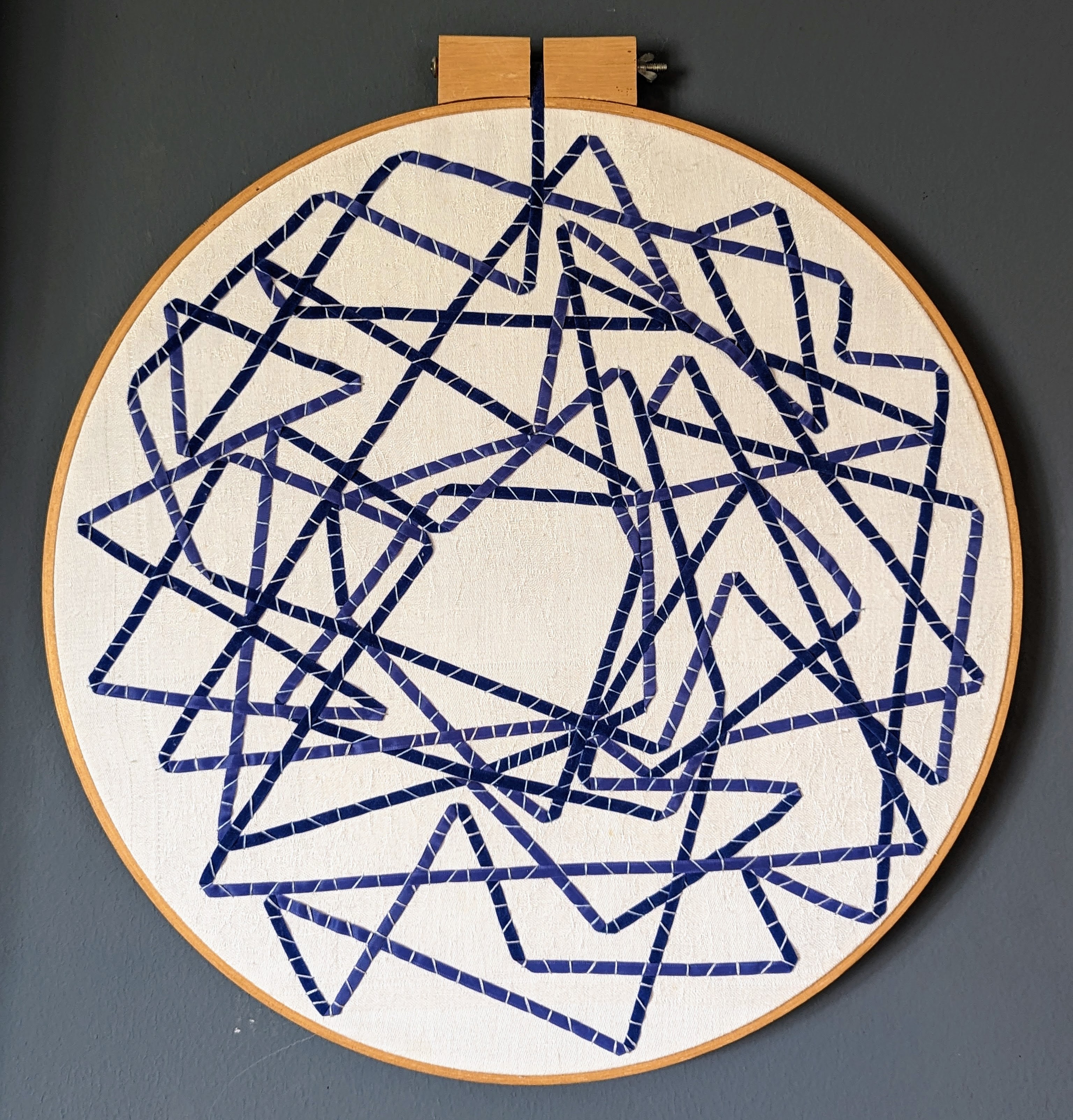
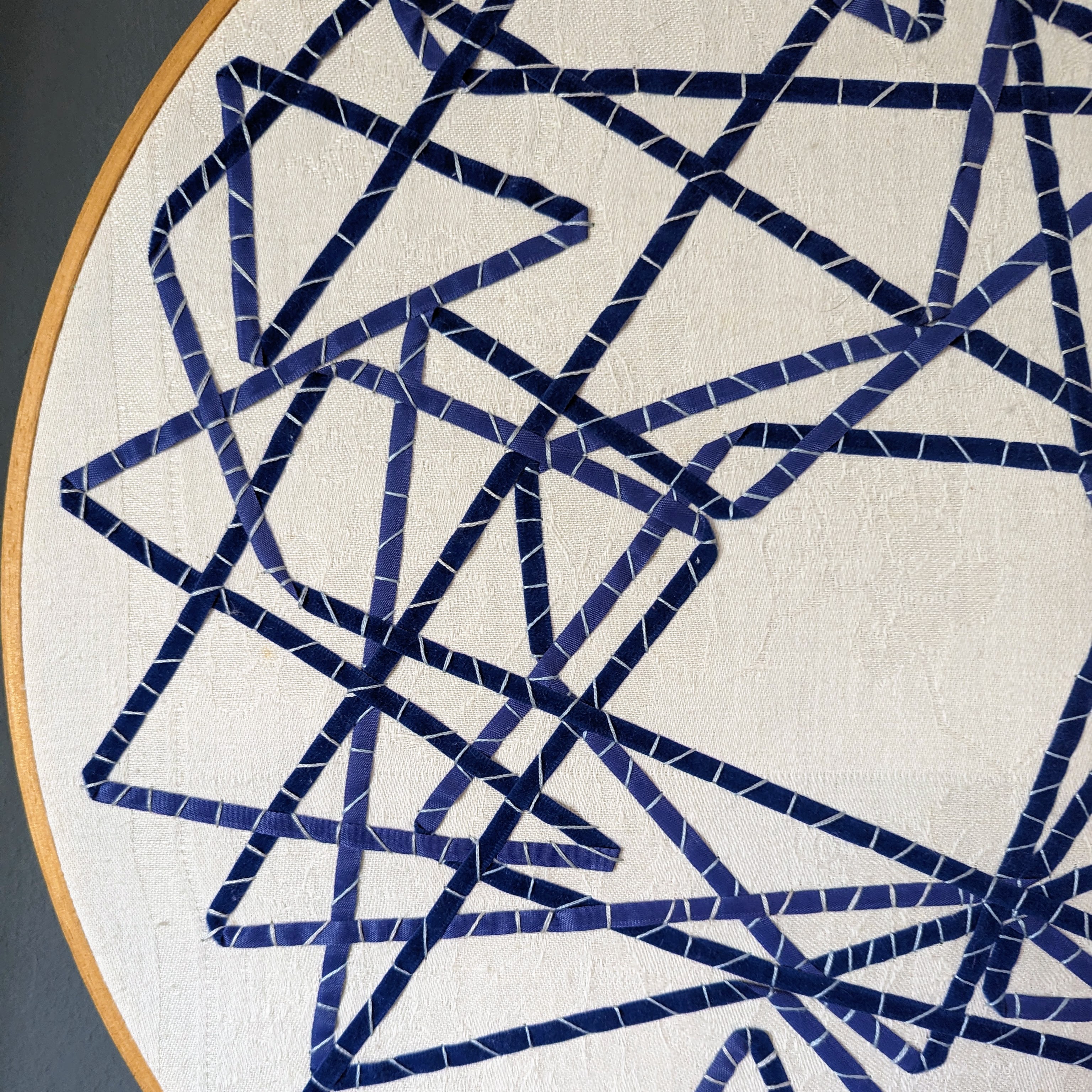
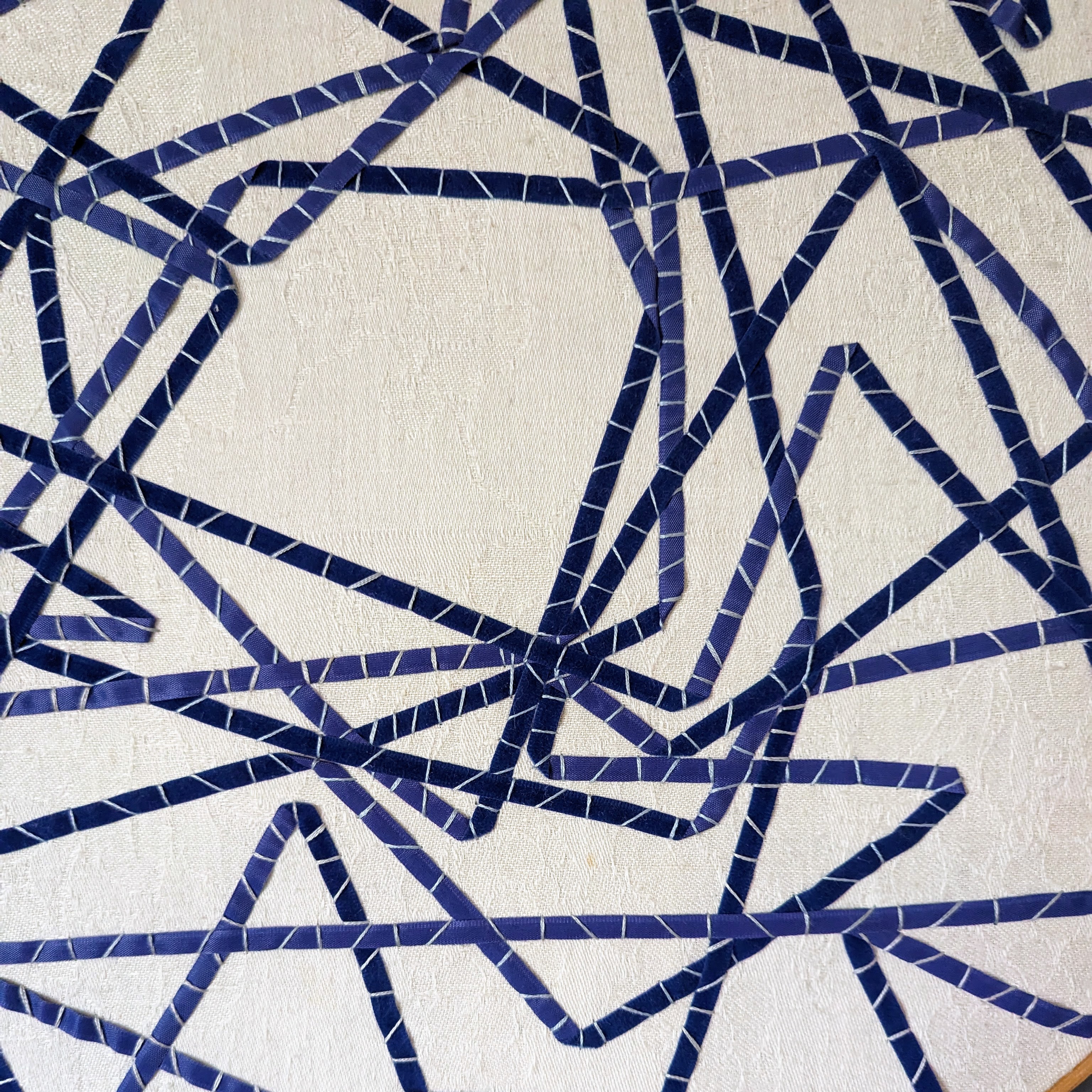
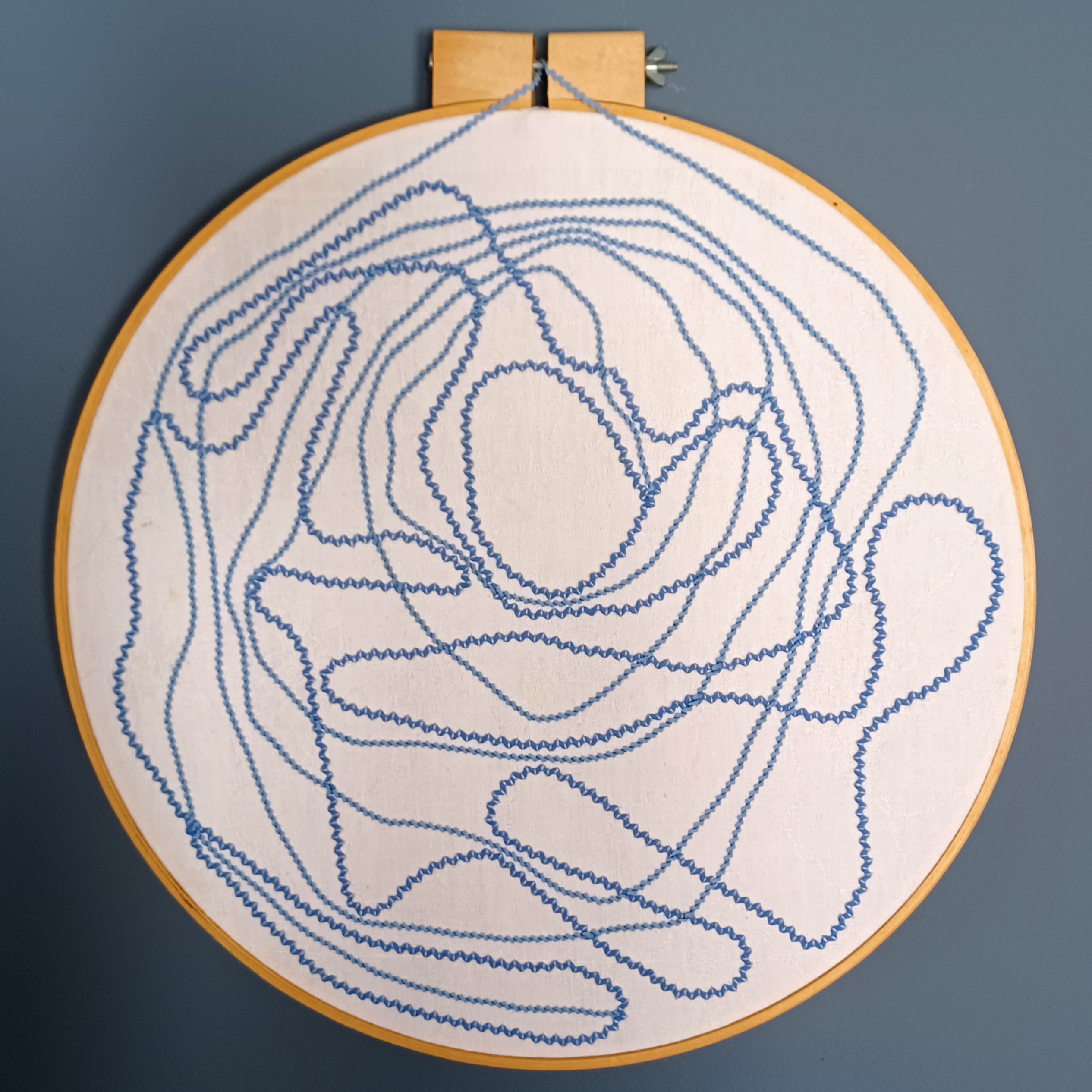
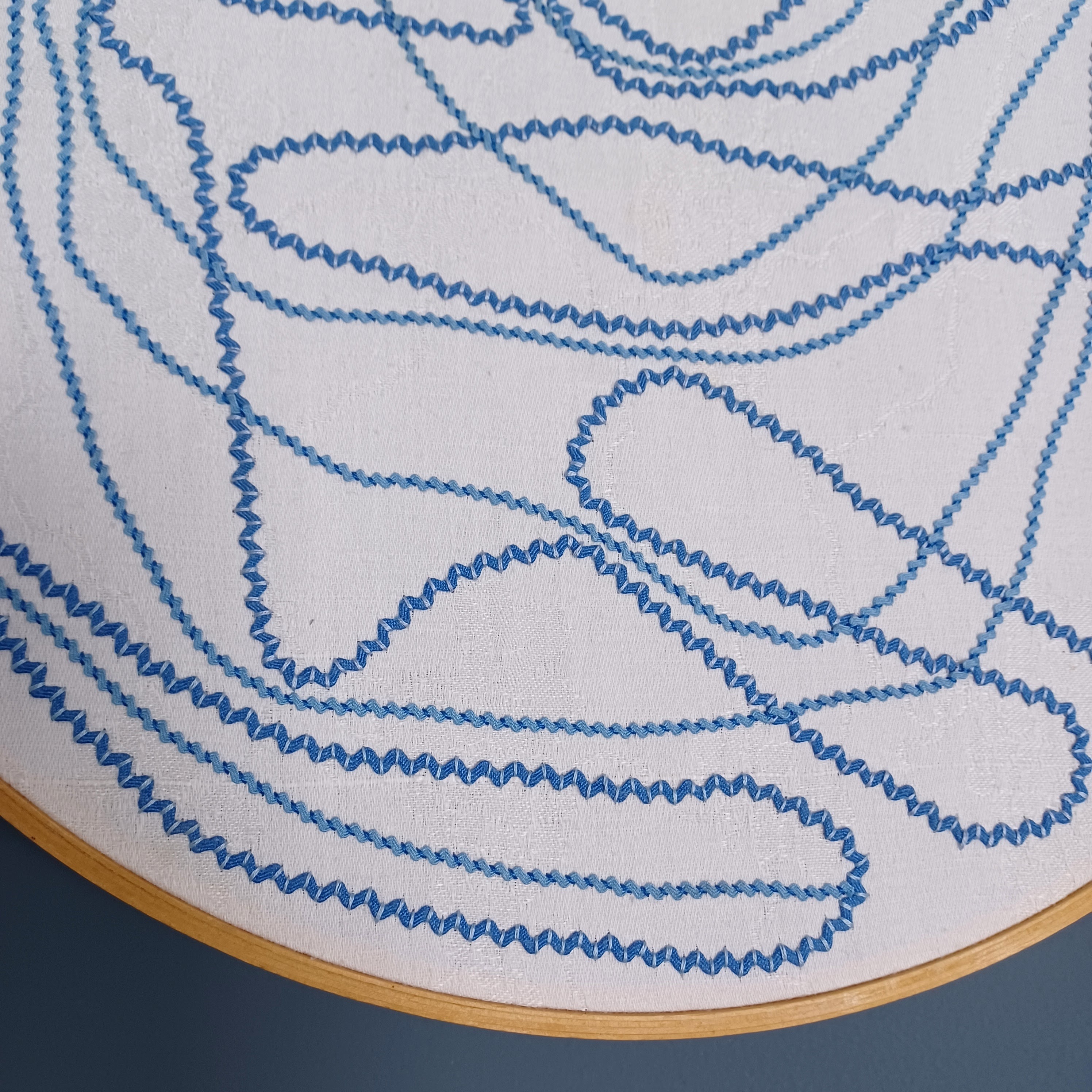
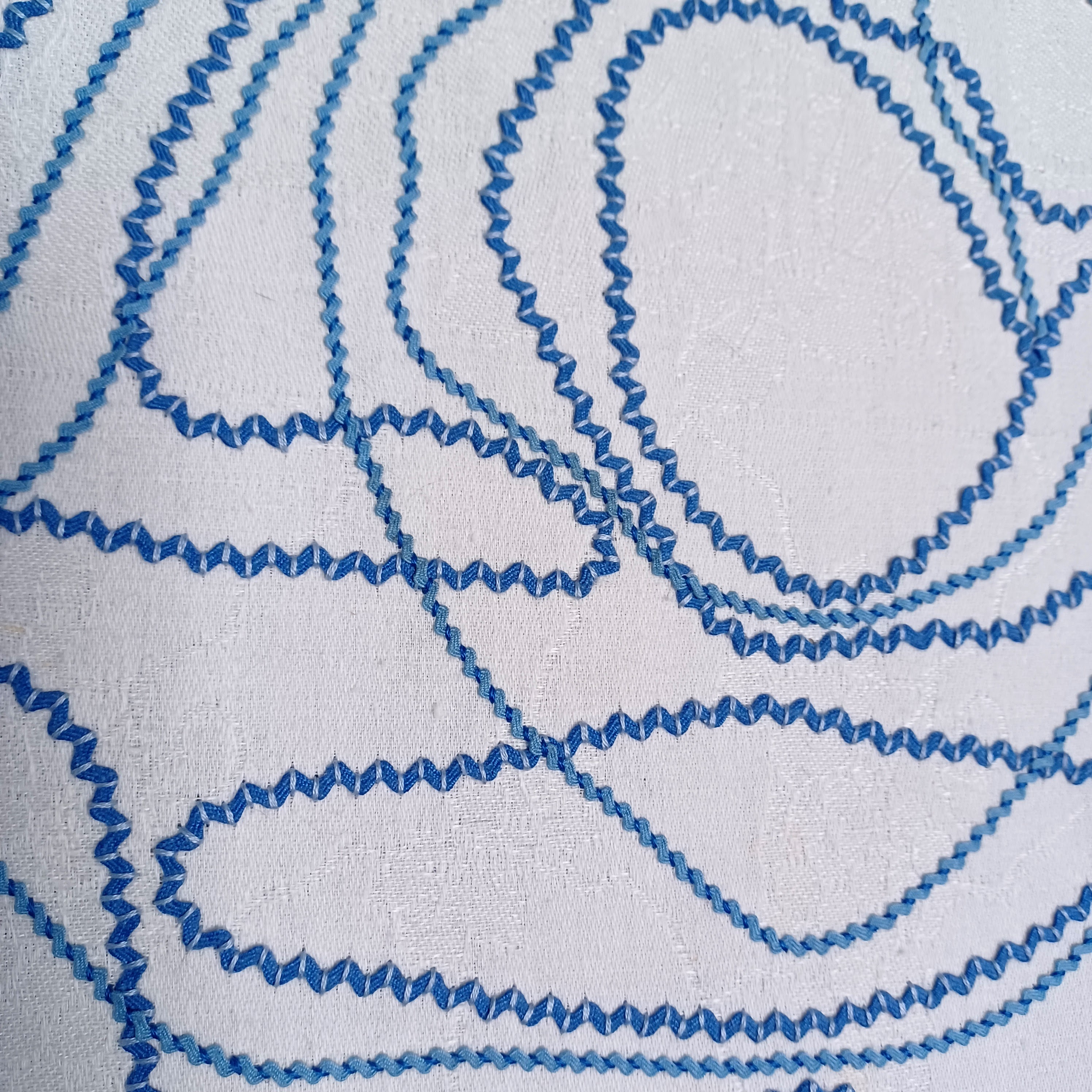
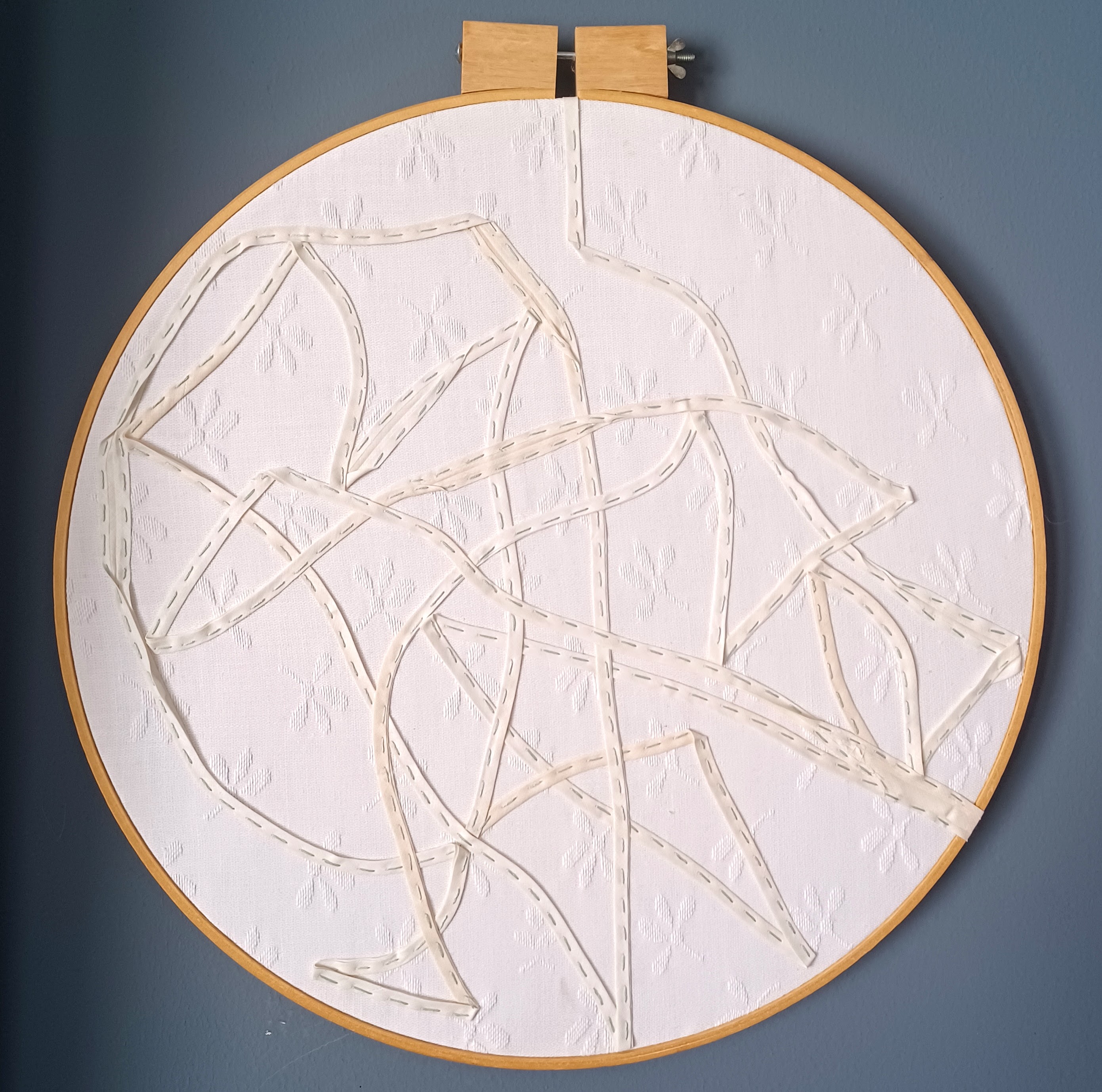
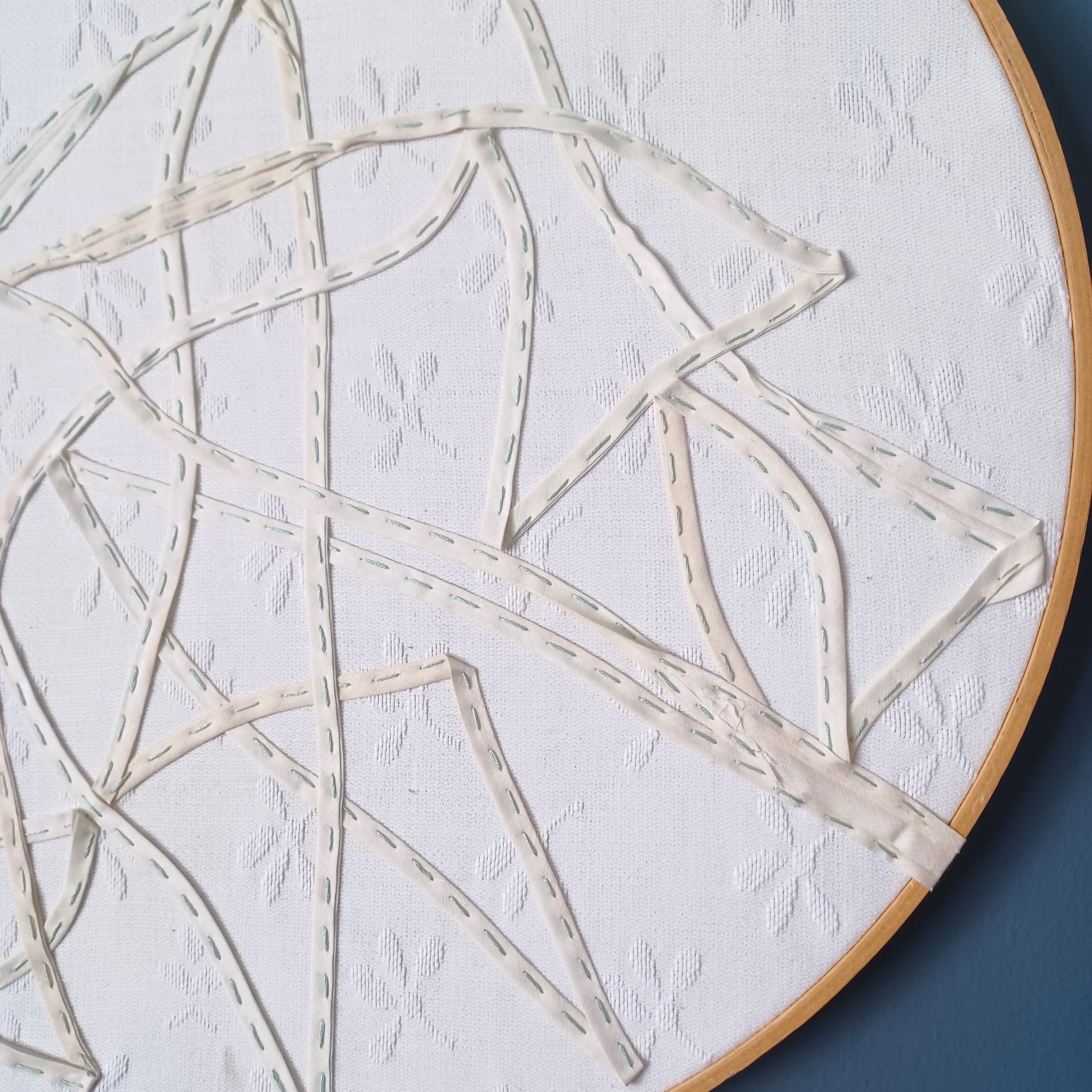
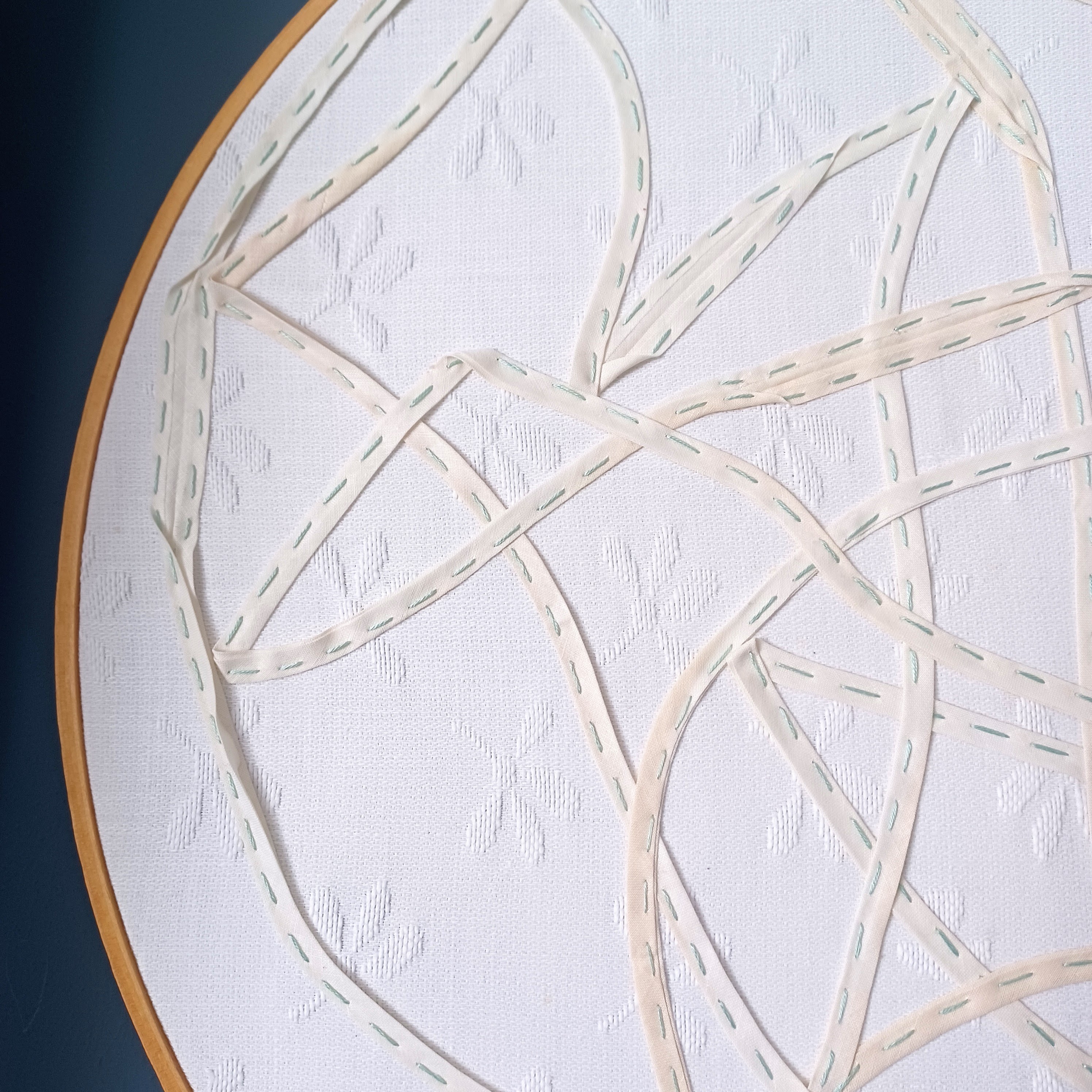
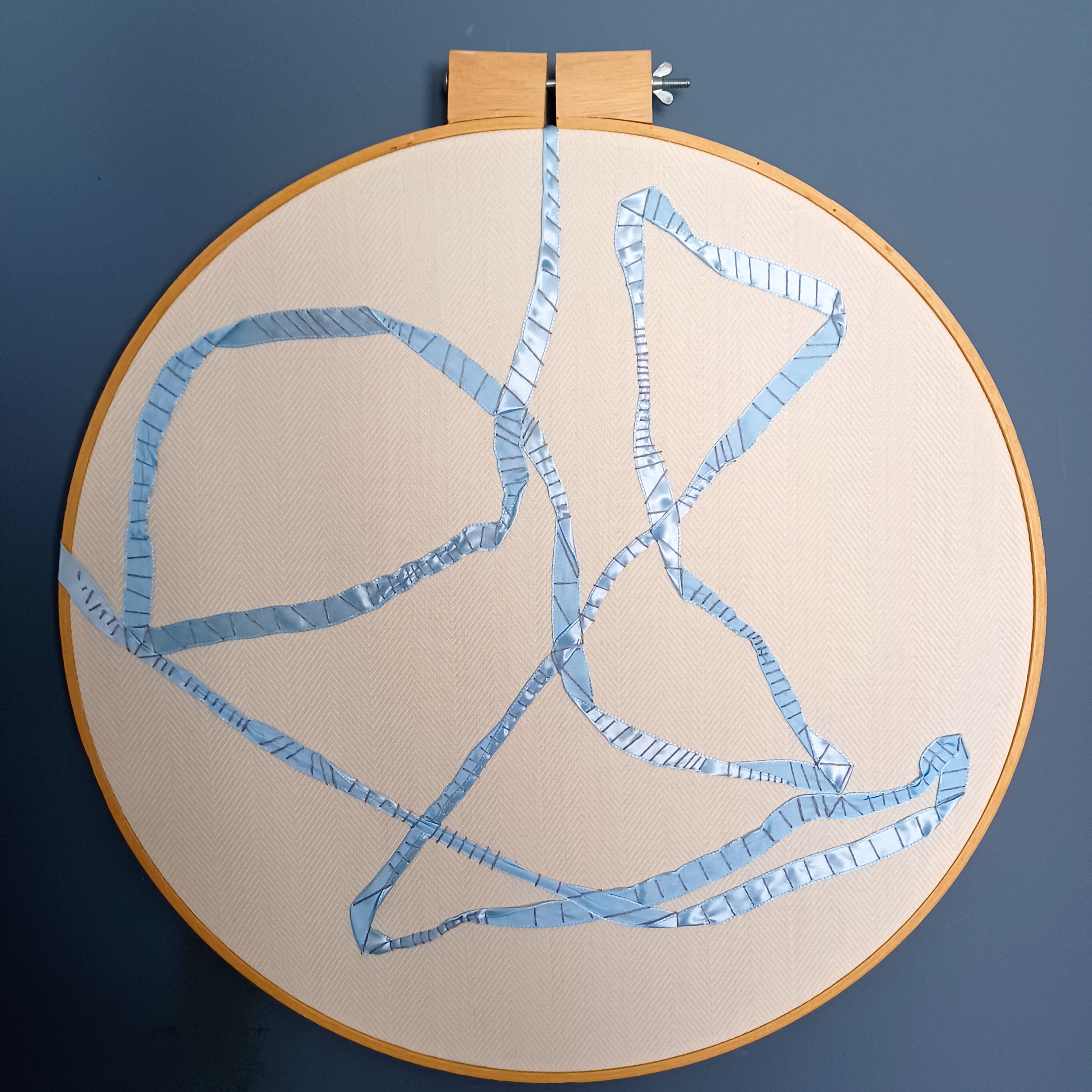
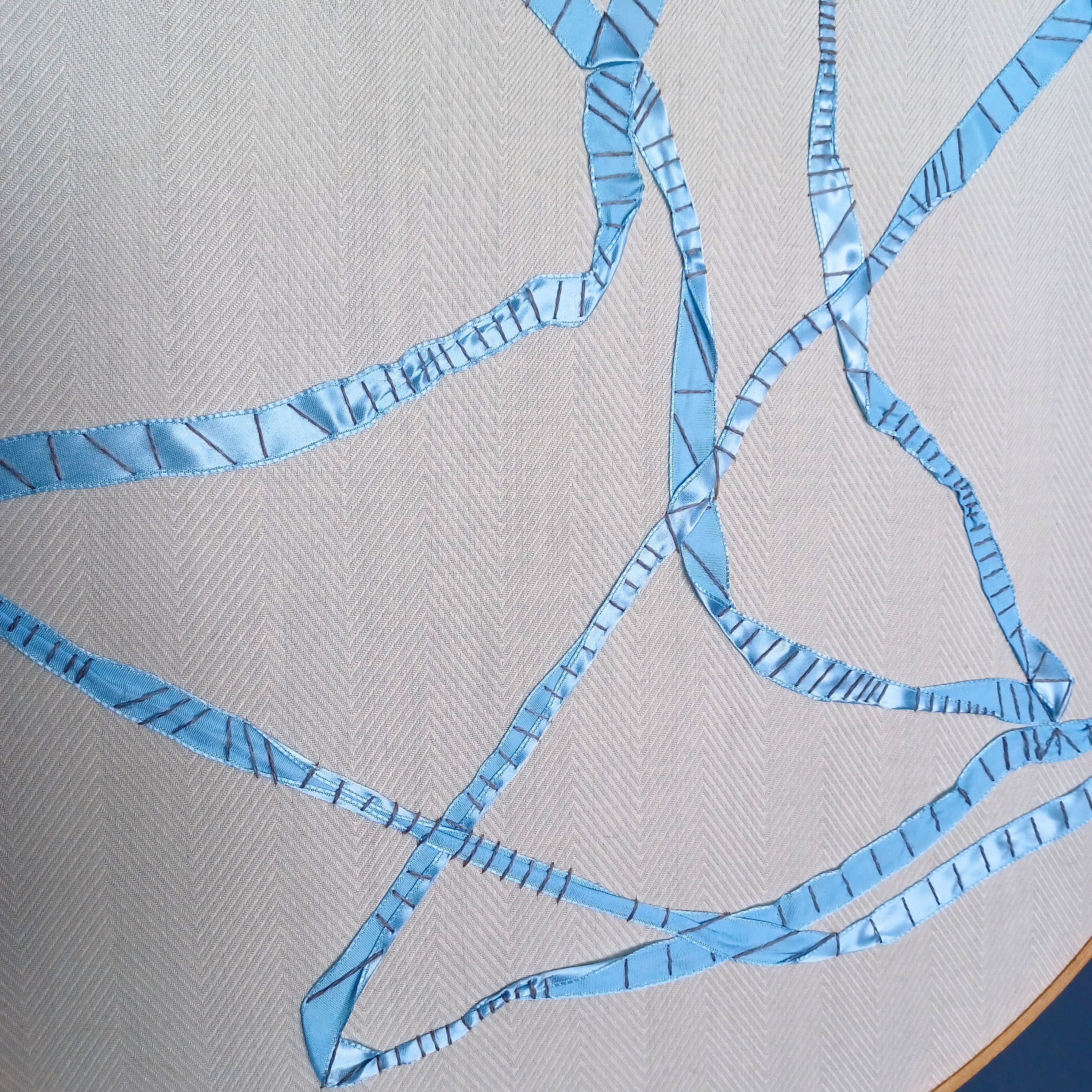
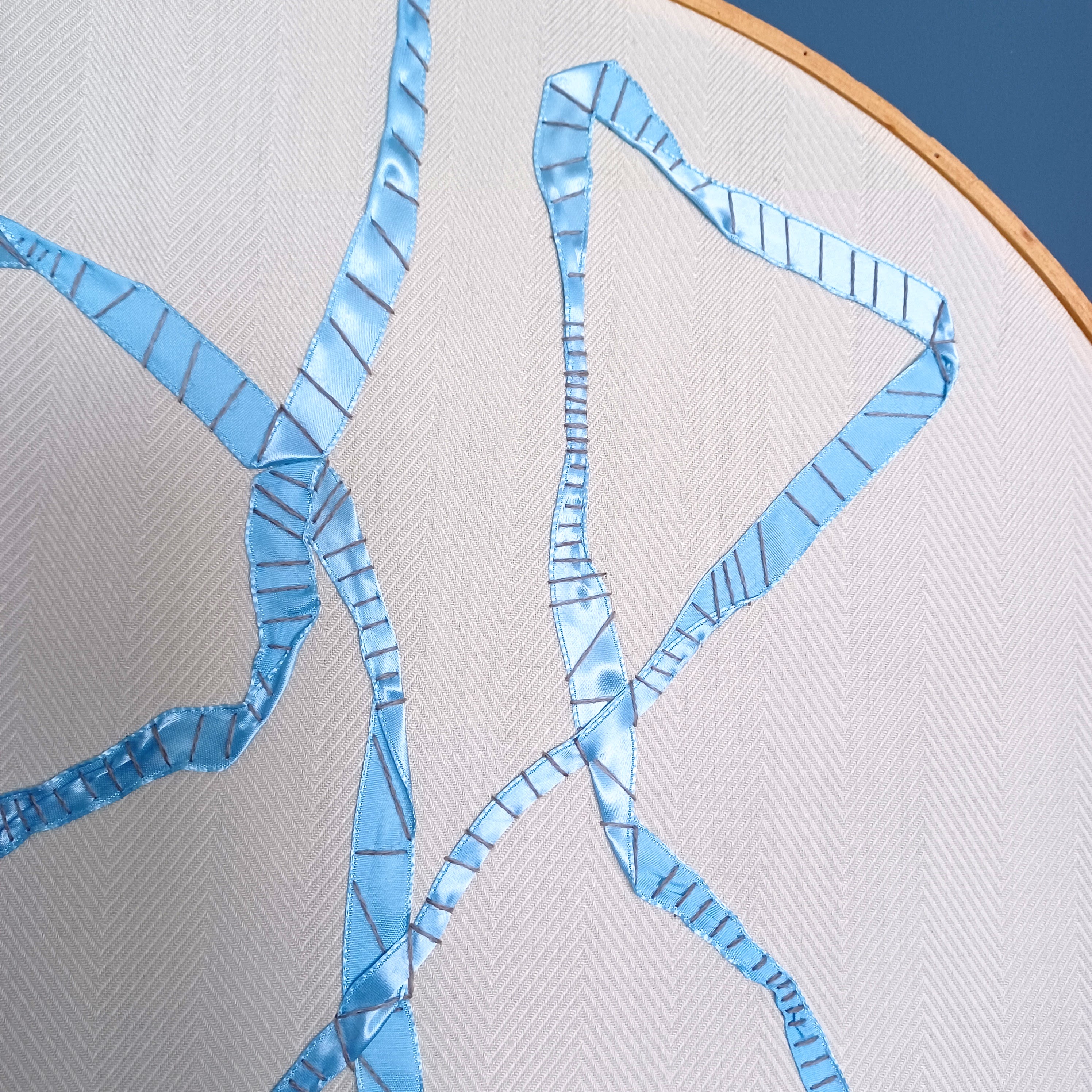
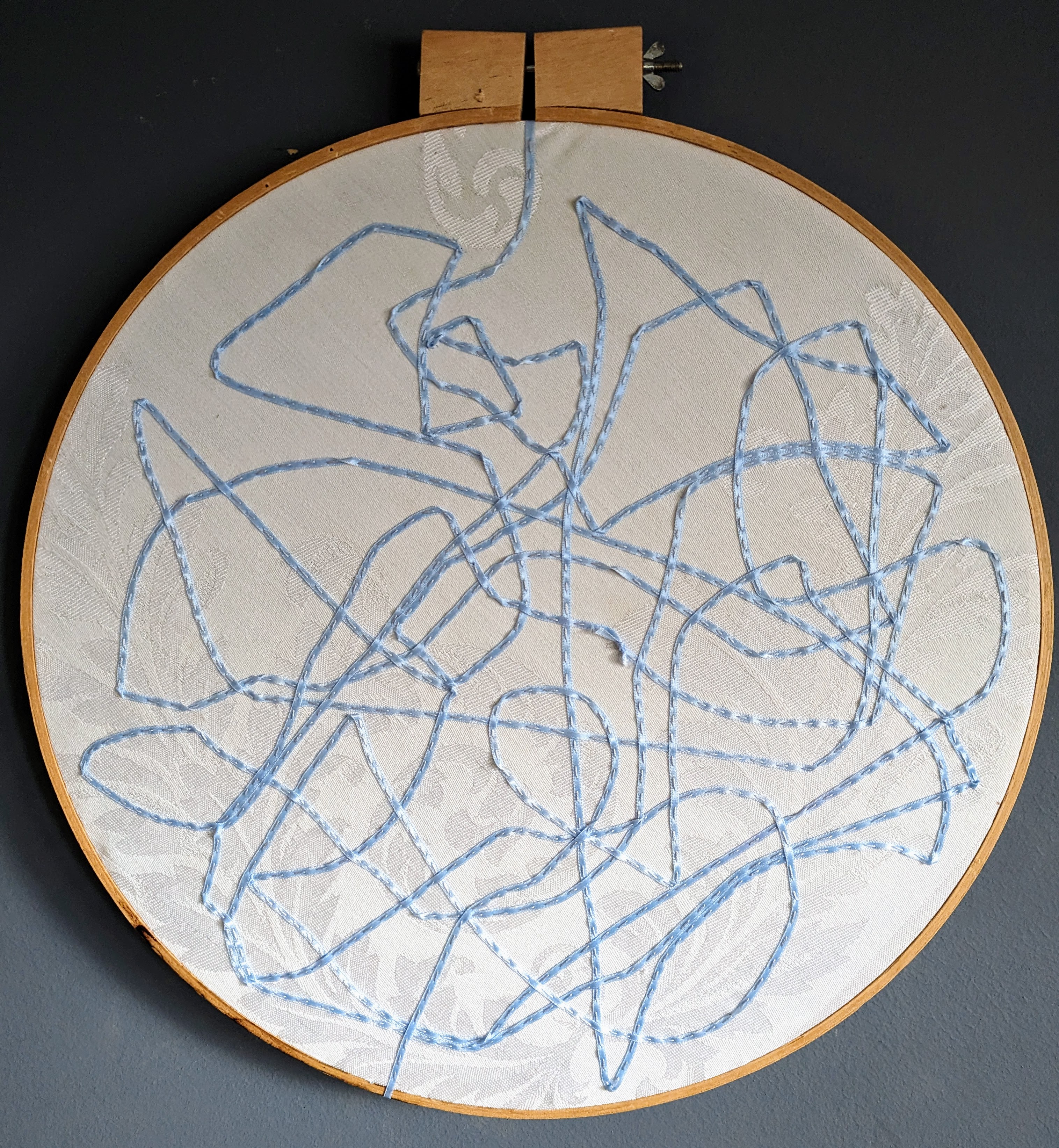
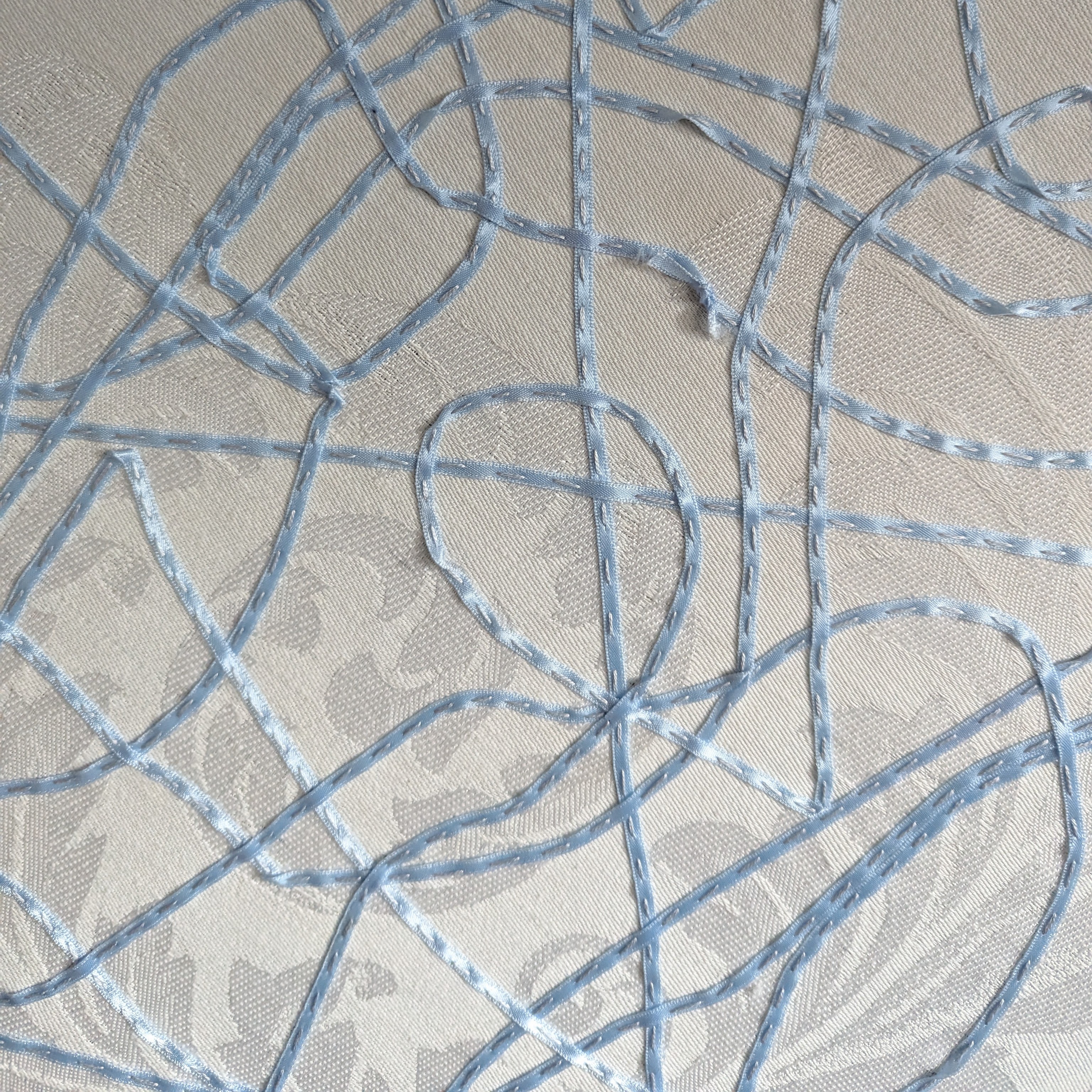
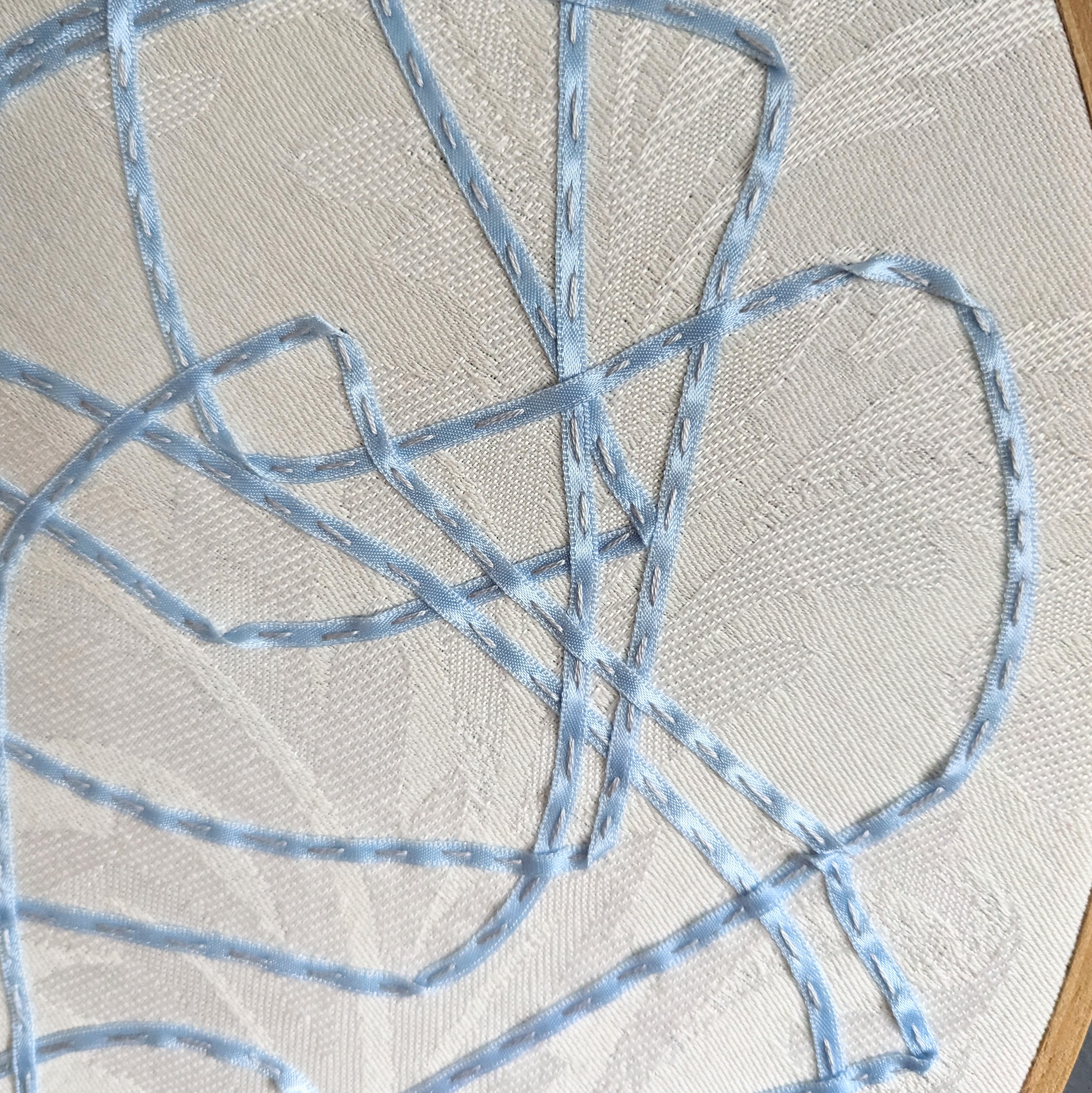
All works in this series were created by hand-stitching with embroidery floss on vintage fabric with vintage bias tape or rick-rack. Each measures 18 inches. Click on any image to enlarge and open slideshow. Additional images are available upon request.
Untangling a loaded concept, hard to define. Bias shows up in our lives, we hope uninvited. We can be aware, or not, of the mess. Distortion. Unreasoned. Opposition. Closed. Follow a thread and maybe, if we’re lucky, we can reach a flow state. “The question is intricate, and there are many secret biassings concerned in the solution of it.” 1
A strip cut on the grain. Don’t follow the straight line. Fold in your raw edges. Press. You can be a curve. You can be anything. And also accept that singular is not always best. Stretch your tendencies. Perceive. Breathe.
Bias, defined: oblique; looking two ways; set course in any direction; out of the way; a swaying influence, impulse, or weight; a systematic distortion; an inclination, leaning, tendency, bent; aslope; athwart; off the straight; awry; to influence, affect; to cause to swerve; propension; a kind of work resembling ‘gathering.’ 2
It is permissible that art or feelings cannot be put into words. It is enough to look and feel. Paying attention is a revolutionary act. Observing physical details in an increasingly artificial world is a revolutionary act. Comprehending the hand, the time, the materials, the craft in a process is a revolutionary act.
The act of stitching is slow, thoughtful, and deliberate, – like viewing can be. Here’s an invitation to clear your head and observe. How do you feel? You don’t necessarily need to think, although the pathways may lead you somewhere. Don’t fight. Allow. Take your time.
- 1865 Carlyle Fredk. Gt. V. XIII. vii. 74
- Simpson, J A, et al. Oxford English Dictionary. Additions Series. Vol. 2, Oxford England, Clarendon Press ; New York, 1993, p. 166-7.
 SARAH FRENCH